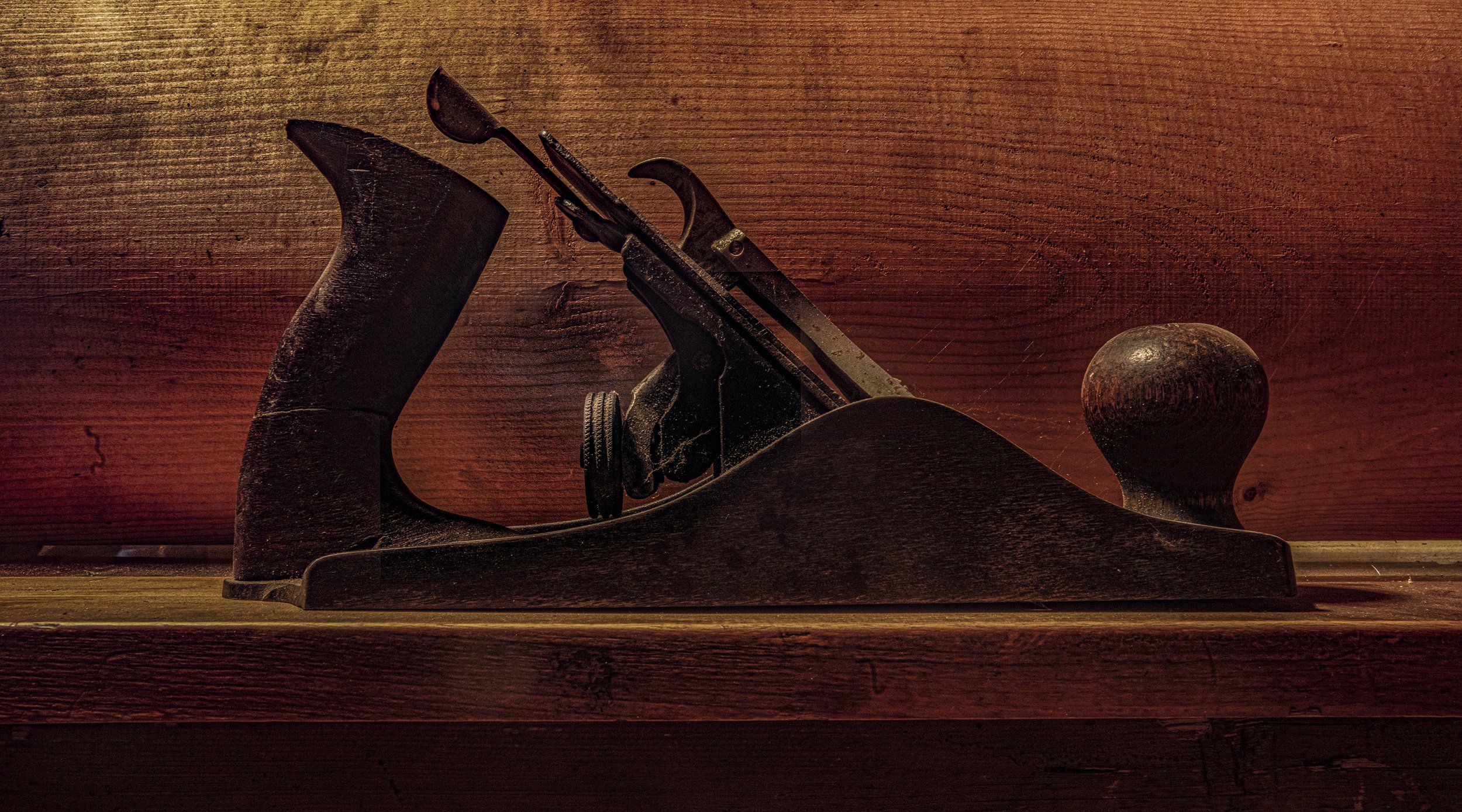
TOOLS OF THE TRADE
These are the objects that shaped this place—steel, wood, rope, and firelight carried by the hands of those who carved paths into the northern wilds. Loggers, trappers, outfitters, voyageurs… people who moved through the boreal with purpose, grit, and a quiet kind of reverence. Their tools were never just tools. They were companions, lifelines, and the language of survival. This gallery is a tribute to that legacy—simple instruments that, in the right hands, could bend wilderness into story.
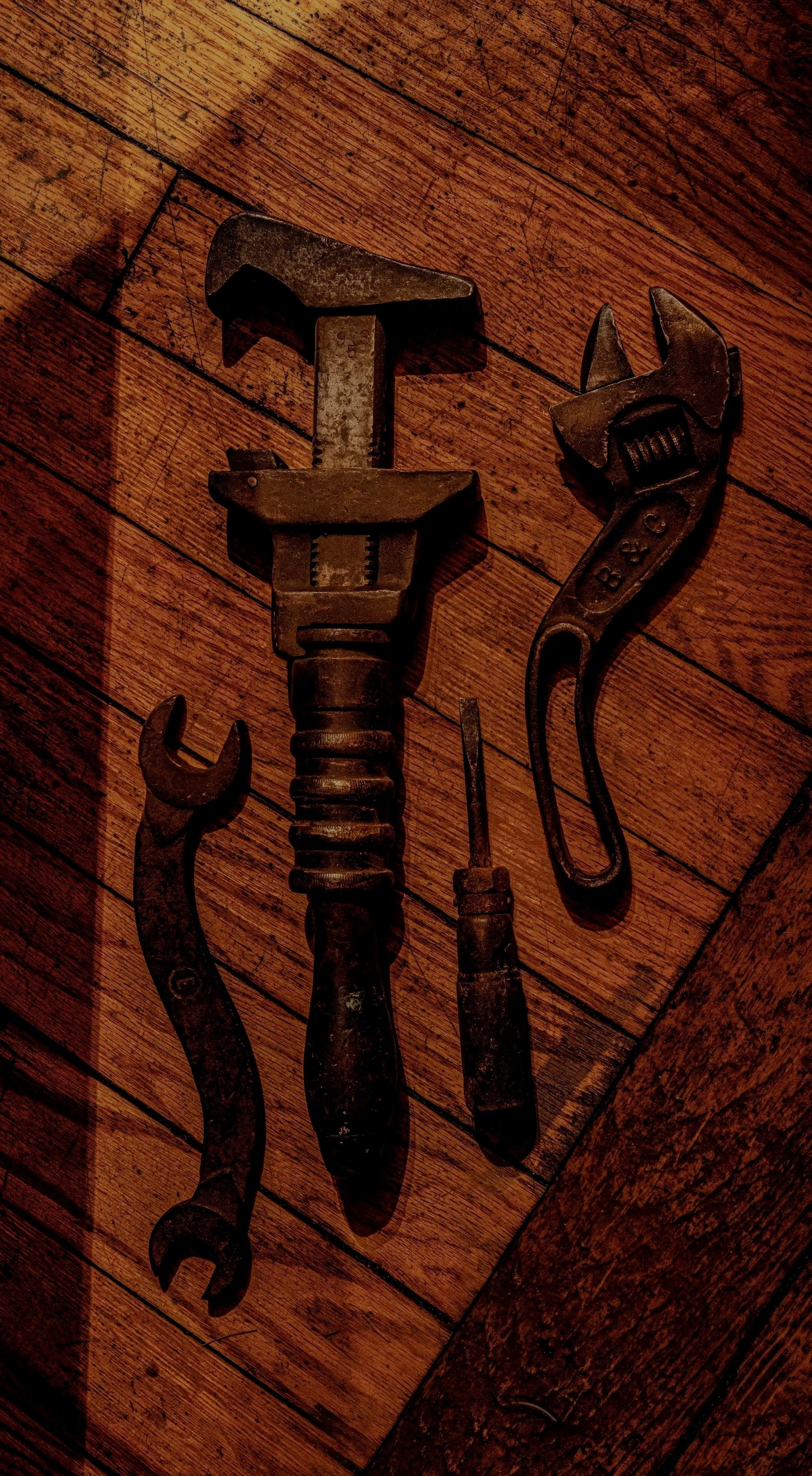
BY HANd
Long before power tools reached the far end of the Gunflint Trail, every hole drilled into timber began with a tool like this. A hand brace fitted with an auger bit—simple iron, shaped for leverage and patience.
With one hand steadying the head and the other turning the crank, the bit would slowly pull itself into the wood, shaving spirals from the grain as it cut deeper and deeper. Each hole required effort. Each turn of the handle meant another push of the shoulders, another slow circle of iron against pine or cedar.
Tools like this helped build places like Clearwater Historic Lodge & Outfitters, where cabins, docks, doors, and beams were once assembled by hand. Thousands of holes—each one carved slowly into timber by sweat, patience, and muscle.
Now the brace sits quiet, its work long finished. But the marks it left behind remain everywhere in the lodge: hidden in beams, buried in joints, holding together a place that has stood on the edge of the wilderness for nearly a century.
Signed and numbered,Limited to 50 prints. No frame / Print only
FEBRUARY FLAME
On a bitter February night along the Gunflint Trail, I carried this old oil lamp out beneath the winter sky and set it glowing under the steady watch of Orion. The cold had that deep, metallic edge that only comes in the heart of a northern winter—when sound carries farther, breath hangs longer, and even the stars feel sharpened by it. There was no hum of power lines. No distant headlights. Just a small, living flame pushing back against the dark the same way it has for generations.
This photograph feels less like a moment captured than a moment remembered—a look back to a time when light was earned in ounces of oil and patience, when warmth came from wood split by hand, and survival leaned heavily on skill rather than convenience. People once made entire lives work by the reach of a single lantern like this—reading by it, mending by it, waiting out storms by it. Beneath Orion, unchanged and eternal, this quiet flame becomes a bridge between now and then—a reminder of how little it once took to hold the night at bay.
Signed and numbered,Limited to 50 prints. No frame / Print only
weight of the years
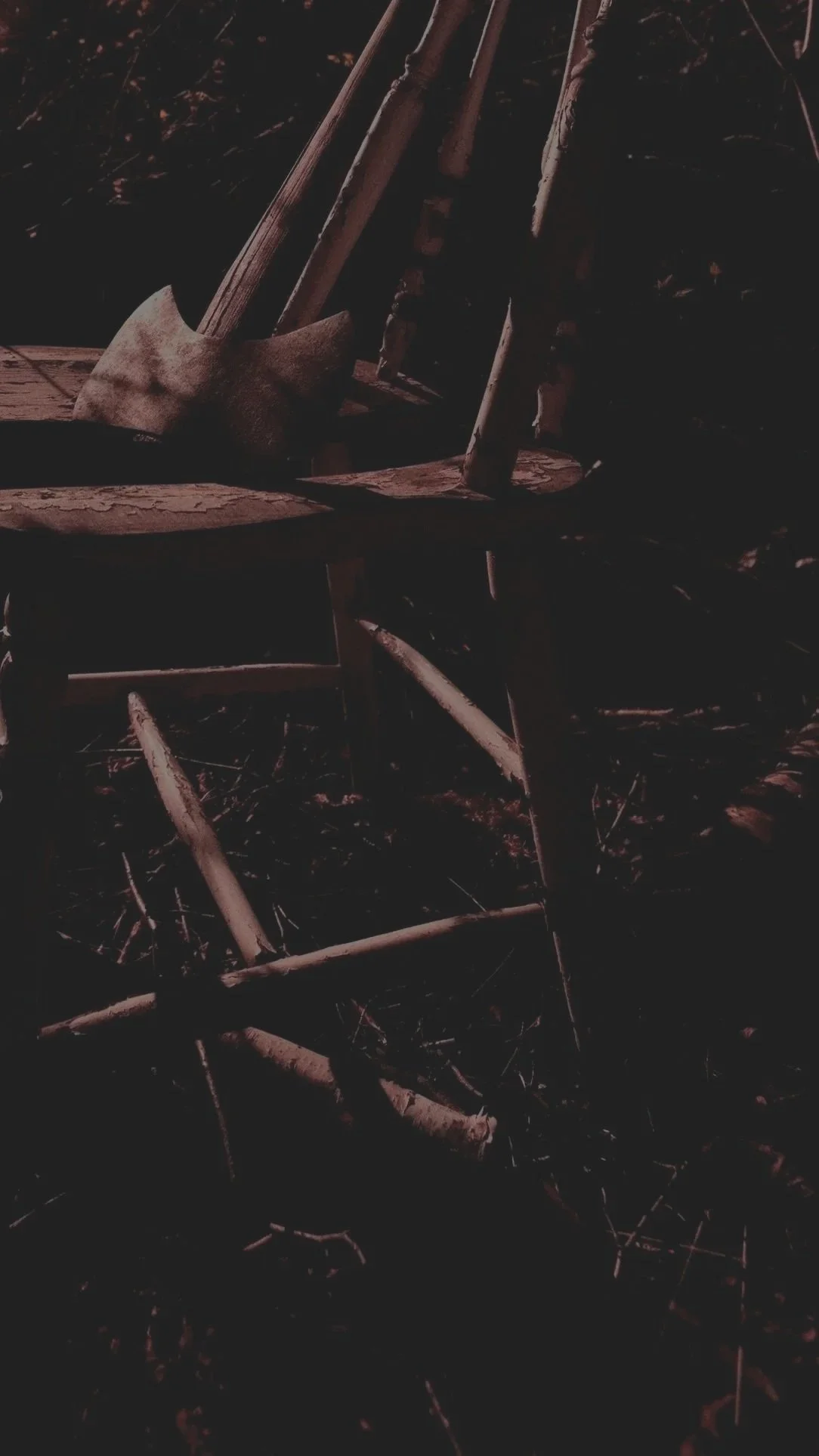
An old chair and a weathered axe rest together beneath the moonlight, their purpose long fulfilled and their histories largely forgotten. Time has stripped away much of what they once were, leaving faded paint, worn wood, and rusted steel to quietly endure among the undergrowth. Moonlight filters through the trees, illuminating the scene as if for one final portrait. The chair sits empty, the axe laid across it, both waiting in a silence that feels older than memory itself.
What draws me to this image is not what I know, but what I can only imagine. I do not know who sat in this chair, whose hands gripped the worn handle of the axe, or what labors filled their days. Yet standing before them, it is impossible not to wonder. Wood was cut, cabins were built, fires were tended, and long days eventually gave way to evenings of rest. The memories themselves may be lost, but the evidence of a life remains. These objects are reminders that every landscape is shaped not only by the forces of nature, but by the countless ordinary people who passed through it, leaving behind stories that will never be told, yet are somehow still felt.
Signed and numbered,Limited to 50 prints. No frame / Print only
THE WOODSMAN
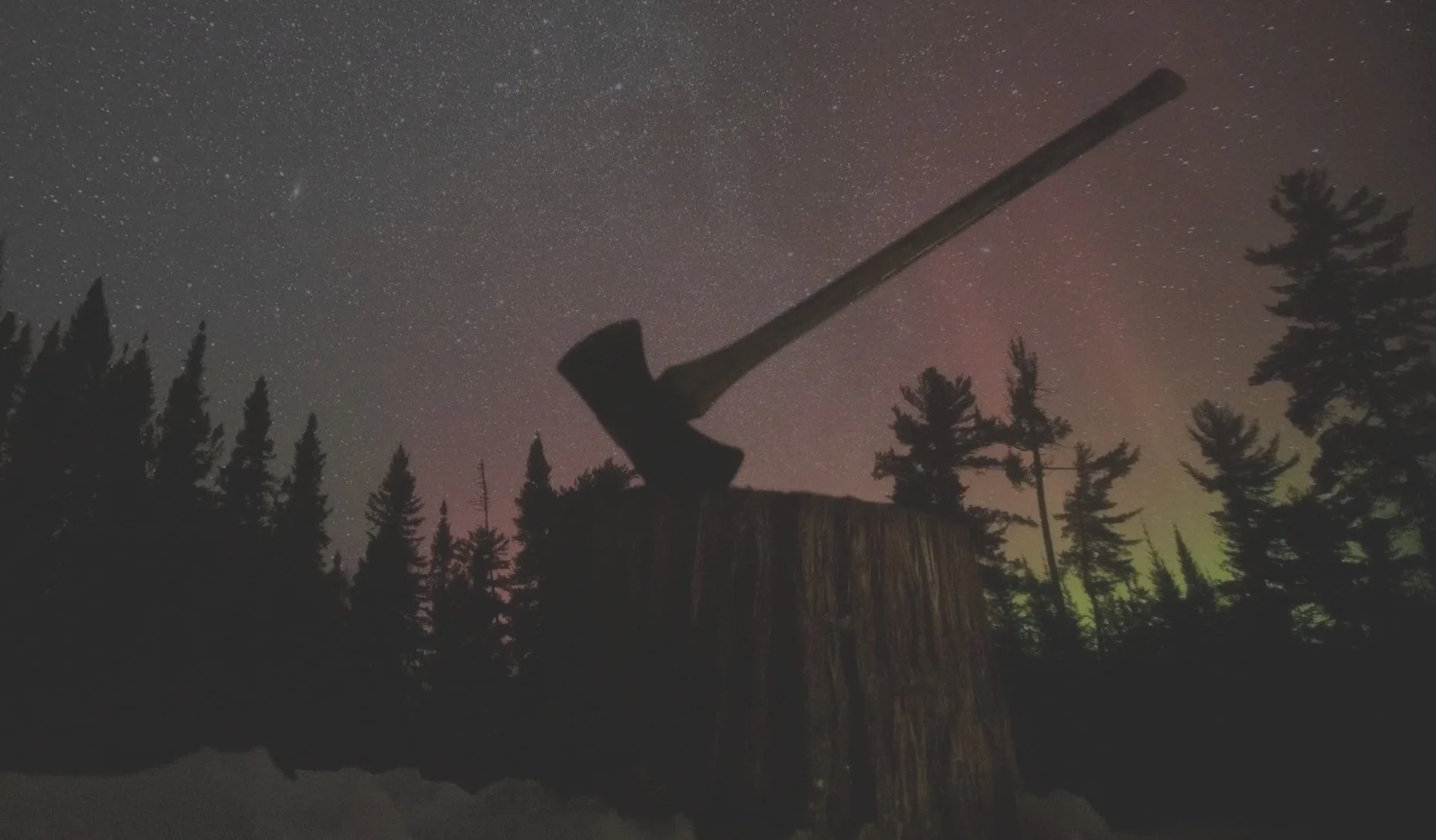
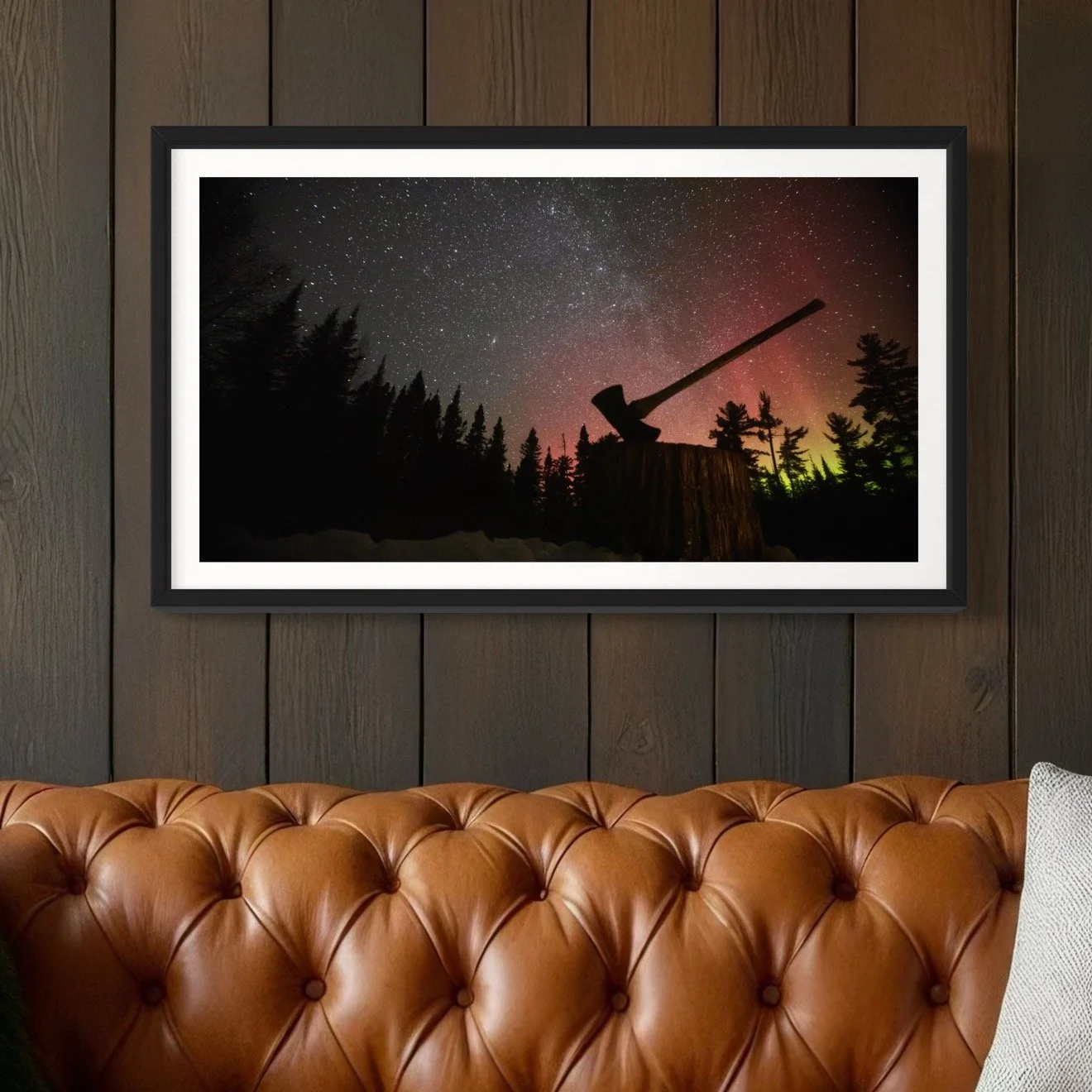
An axe rests motionless on a weathered stump, its silhouette sharp against the burning hush of northern light. The trees stand like sentinels beneath a thousand stars, and the last swing of the blade lingers in the cold night air.
This image was made along an old logging trail that once fed the hunger of sawmills—still etched into the wilderness beside Clearwater Historic Lodge. Now silent, the path remains, holding the weight of history in its frozen soil and the faint echo of boots, hooves, and iron wheels long gone.
Signed and numbered,Limited to 50 prints. No frame / Print only
EMBER IN THE DRIFT
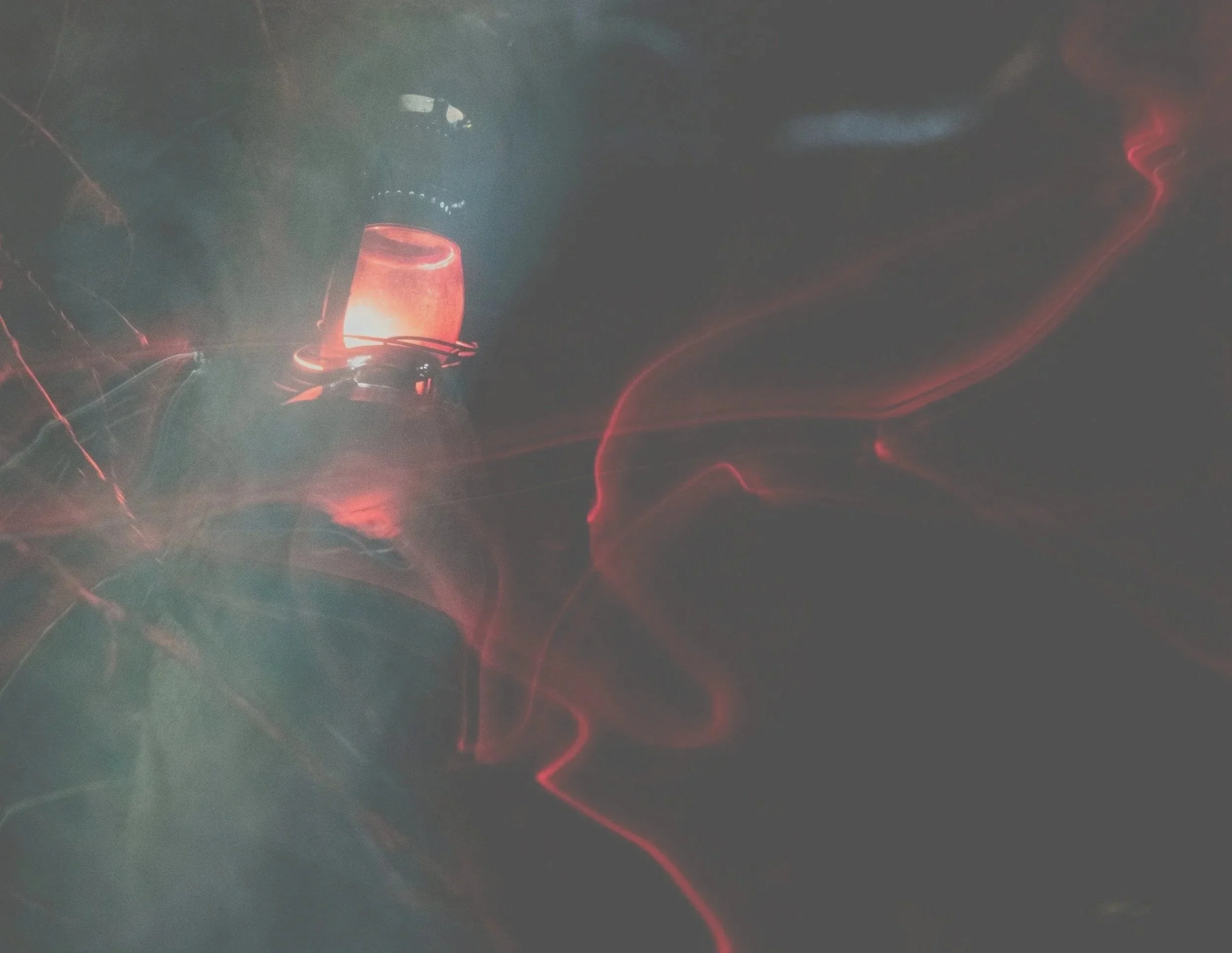
The lantern sits alone in the snow, its glass burning red against the blue hush of winter.
No cabin in sight. No voices. Only spruce heavy with frost, the kind of stillness that feels older than roads or names.This is the North in its purest form—quiet, enduring, untouched. And yet, the light remains.
A simple flame becomes something larger out here: a beacon, a memory, a reminder that warmth is not always loud. Sometimes it is just a glow pressed gently into the drift, holding its place against the vast white silence.
In the Boundary Waters, even the smallest light feels sacred—a pause, a presence, a promise that the wilderness has not gone dark.
Signed and numbered,Limited to 50 prints. No frame / Print only
STEEL BONES
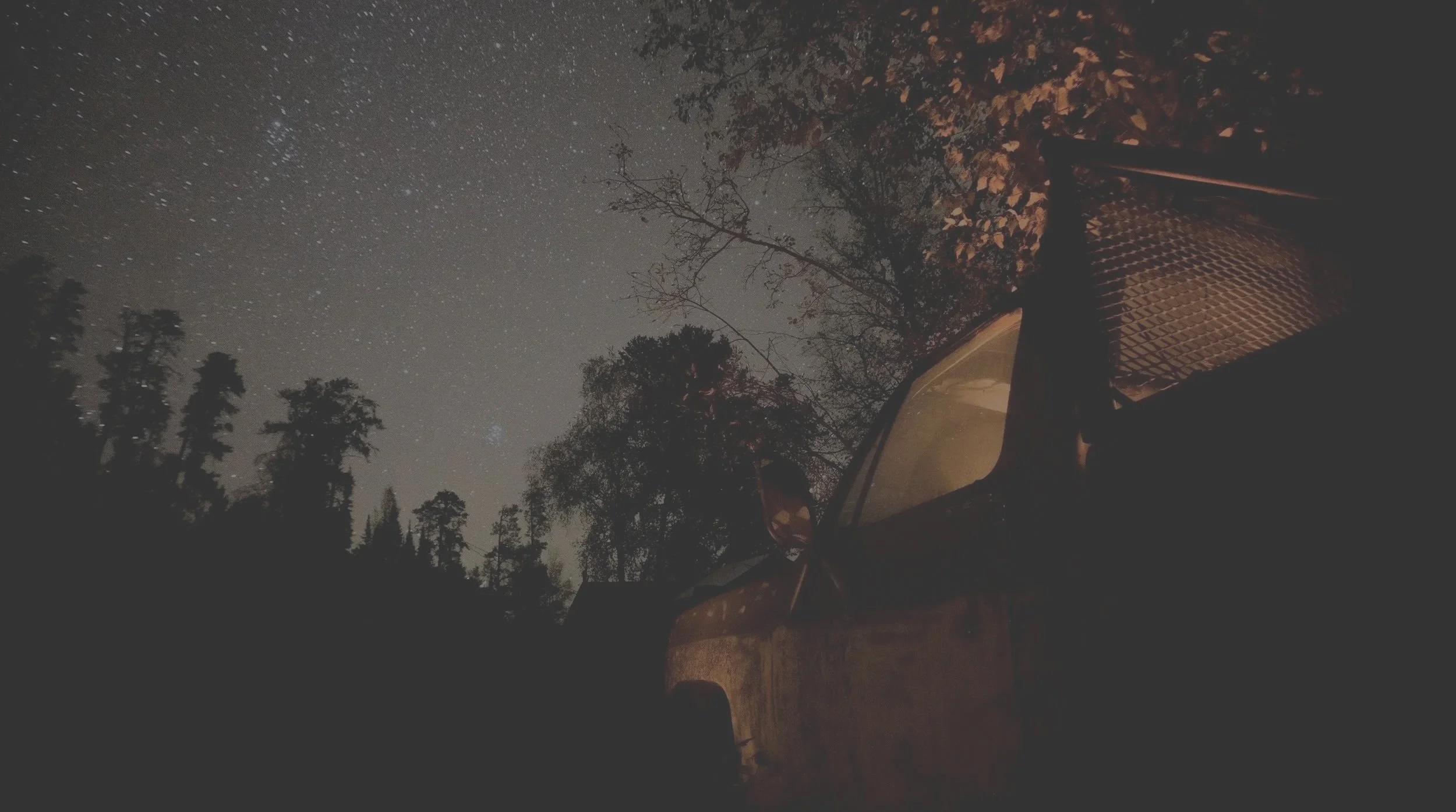
Under the weight of leaves and silence, the old plow truck waits—its frame rusted, its engine quiet, its work long finished. On this fall night, the stars spilled across the sky while the truck caught the glow like memory itself, still holding the shape of effort and purpose.
There’s a kind of dignity in machines like this—used hard, but never broken. It carried weight not meant for its own, braved storms without protest, and always came when called. Even now, resting in stillness, it deserves respect. The bond between human and machine runs deeper than oil and metal—it runs through loyalty, wear, and time.
Signed and numbered,Limited to 50 prints. No frame / Print only
the garden
Bathed in the warm glow of lantern light, an axe stands embedded in a weathered stump beneath a canopy of leaves and stars. Surrounded by the quiet beauty of the forest, it appears almost out of place—an object forged for cutting, resting among things that are living, growing, and reaching toward the light. Yet the contrast is not as simple as creation versus destruction. The same tool that can clear a path, build a shelter, or gather firewood also carries the power to permanently alter the landscape around it.
The Garden reflects on this uneasy balance between humanity and the natural world. Every act of stewardship contains an element of control, and every mark we leave on the land carries consequences beyond our intentions. The axe becomes a symbol of that paradox: a reminder that our ability to shape the world is inseparable from our ability to diminish it. In the stillness of the night, surrounded by beauty
Signed and numbered,Limited to 50 prints. No frame / Print only
OFFERING
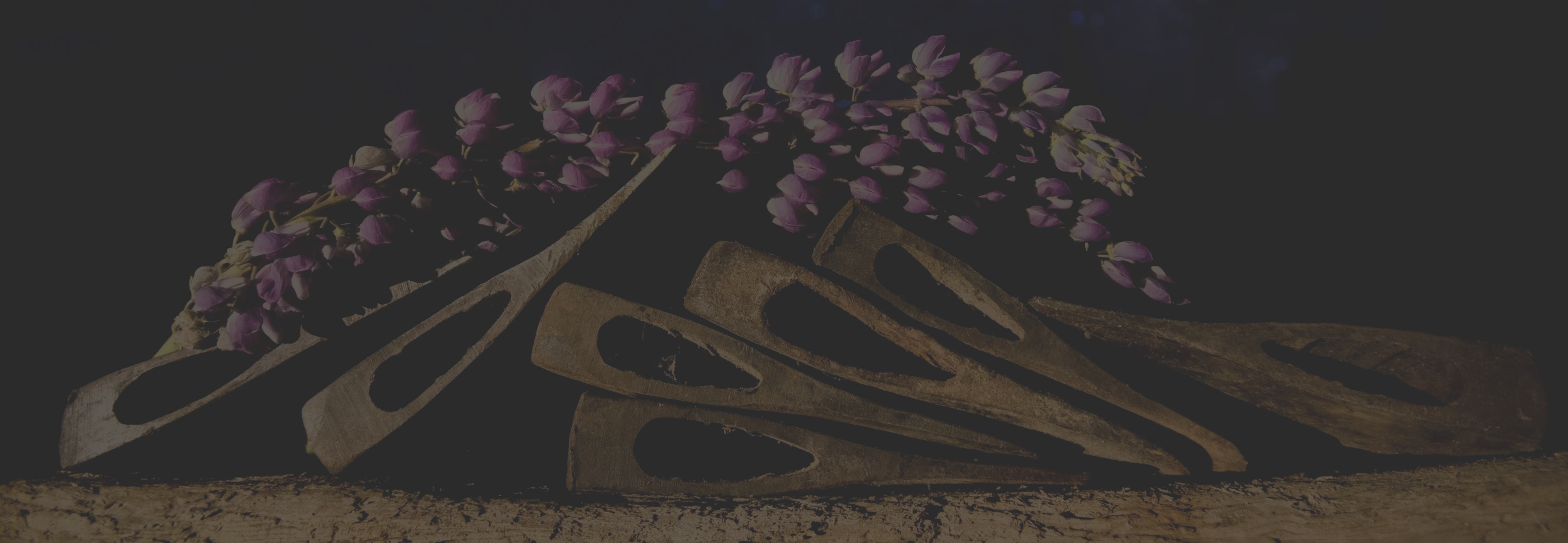
These axe heads once split pine and birch, carving trails through snow and silence. They’ve rested here for decades—stacked like bones beneath the floorboards of the lodge, their edges dulled but not forgotten. Tools once meant for labor, now relics of a wilder rhythm. And then came the flowers—gathered from the forest just beyond the porch, where lupine bloom. I crowned the rust and iron with color. Maybe because even the sharpest things deserve beauty.
Signed and numbered,Limited to 50 prints. No frame / Print only
HONEST EDGES
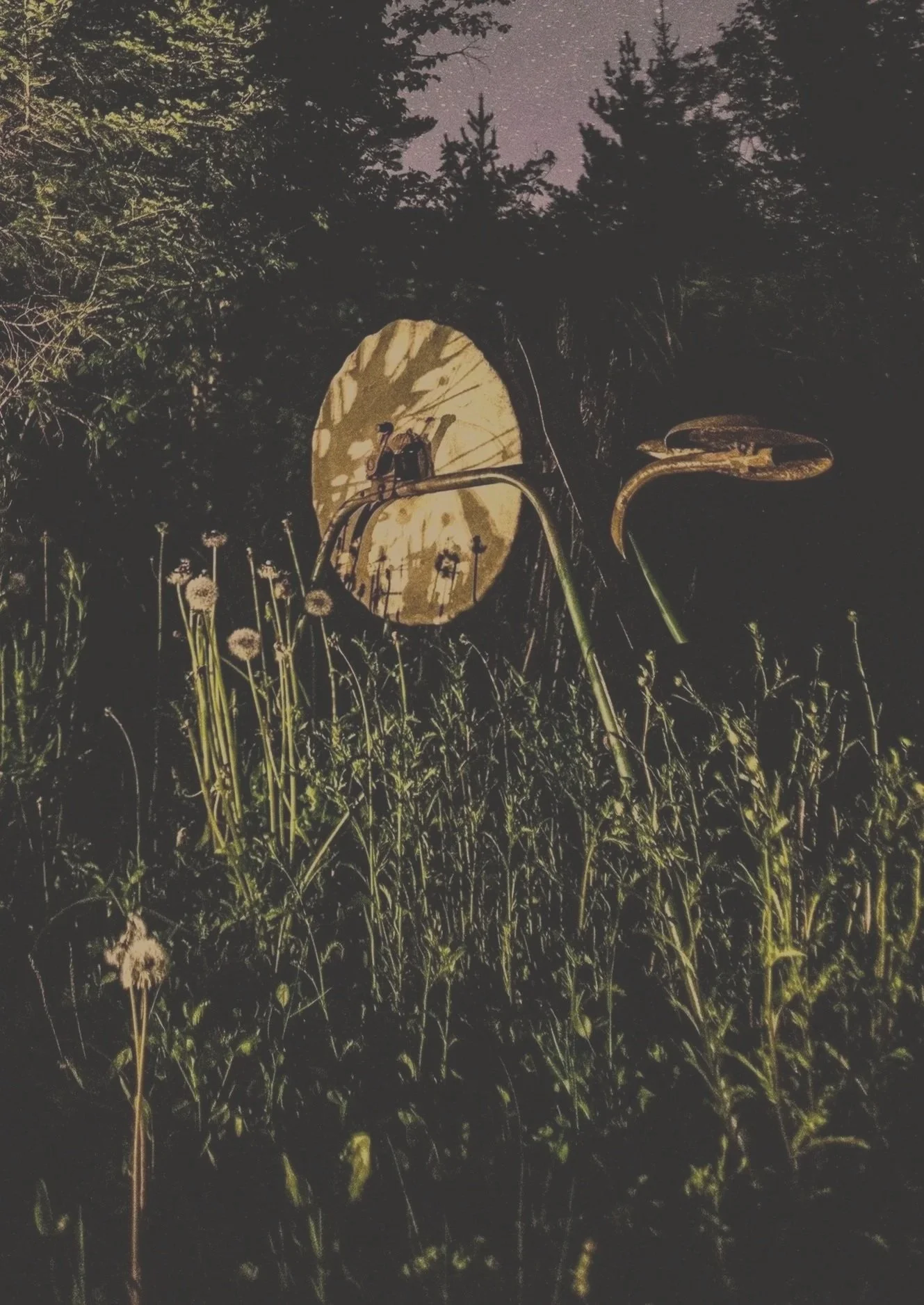
Axes, chisels, drawknives, scythes—steel carried here by hands that needed it sharp, honest, ready. Each pass across the stone took a little metal and left a little story. A nick repaired before winter. A blade tuned for one more season. A moment of pause in a long day of work.
You can feel it in the surface of the wheel—uneven, worn smooth in places, scarred in others. It’s been turned by muscle and patience, not hurry. Water darkened the stone. Sparks flared and vanished. Someone leaned close, listening for the sound that meant the edge was right.
These images aren’t about the tool itself, but about the lives that revolved around it. The intimacy of maintenance. The quiet ritual of keeping things useful. The understanding that sharpness was survival—food cut cleanly, wood split true, work done before night fell.
Nothing here is dramatic. And yet everything mattered.
The wheel remembers hands.
The wheel remembers work.
Signed and numbered,Limited to 50 prints. No frame / Print only
RANGER
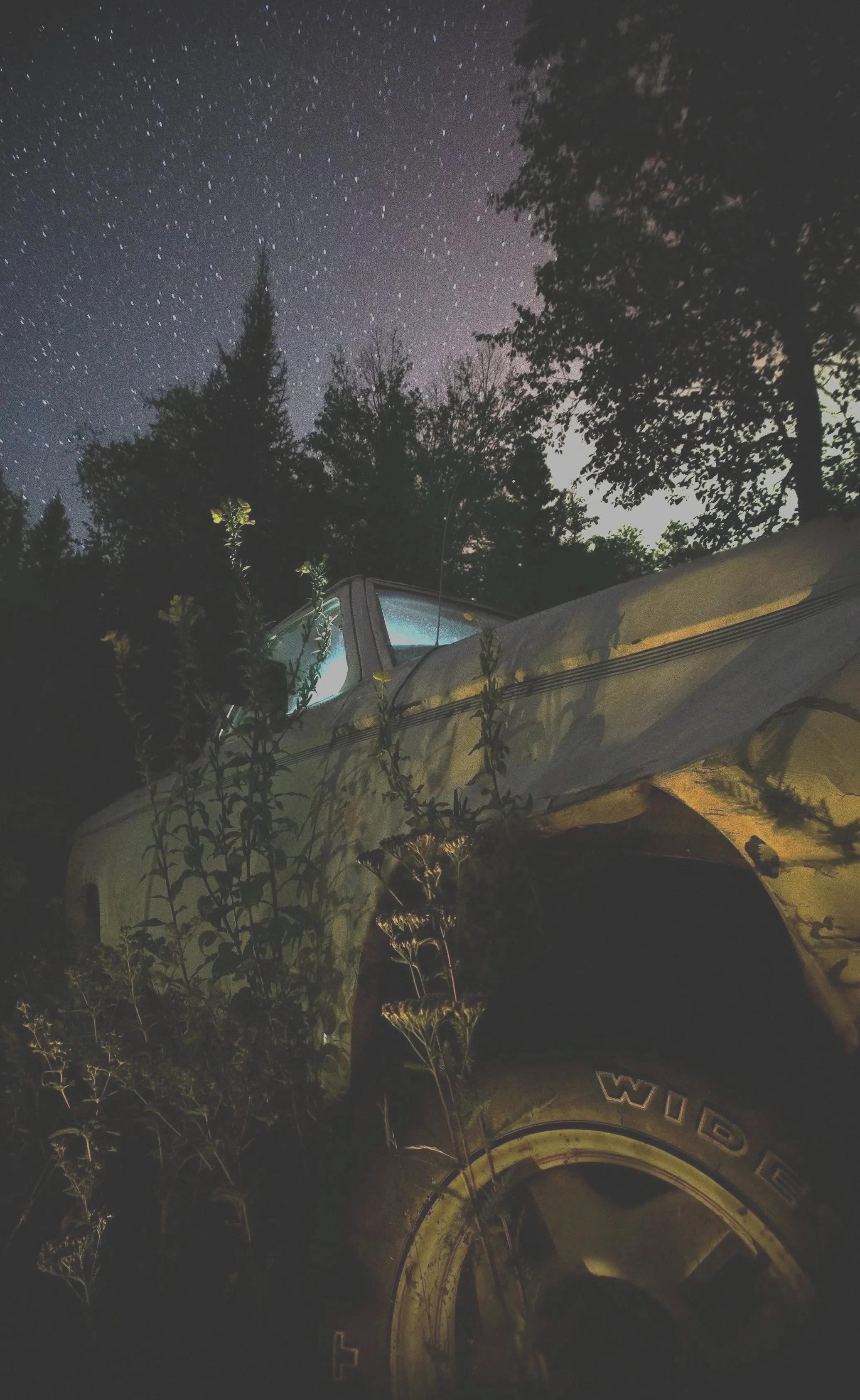
They used to park beneath these same stars—windows fogged, laughter breathless, a cassette humming some slow-burning tune through the dashboard. She wore denim and dreams; he smelled of oil, pine, and recklessness. This truck was their escape hatch, their chapel, their getaway car from the small-town gravity that never let go.
Now rust clings like memory. Grass sways through the wheel well where boots once slammed the door shut. The windshield catches starlight like it used to catch her reflection. No one drives it anymore, but it still waits—engine silent, stories loud.
This is what becomes of wild hearts and steel machines: they settle into the earth, one kiss, one bolt at a time, until only the night remembers.
Signed and numbered,Limited to 50 prints. No frame / Print only