SEASONAL RECORD
The Seasonal Record documents the shifting environmental patterns observed throughout the year along the Gunflint Trail and surrounding Boundary Waters region.
From freeze-up and spring breakup to mid-summer bloom and the return of auroral activity in late August, these entries reflect the cyclical changes that shape both travel conditions and creative work across the Northwoods. Returning to the same lakes, trails, and overlooks across seasons allows for a more grounded understanding of how light, weather, and ecological transitions influence the experience of place over time.
Each entry below captures a moment within that cycle — forming part of an ongoing observational archive rooted in lived experience on the land.
DARK SKY SANCTUARY STUDY
january 2024-25
BWCA / SUPERIOR NATIONAL FOREST
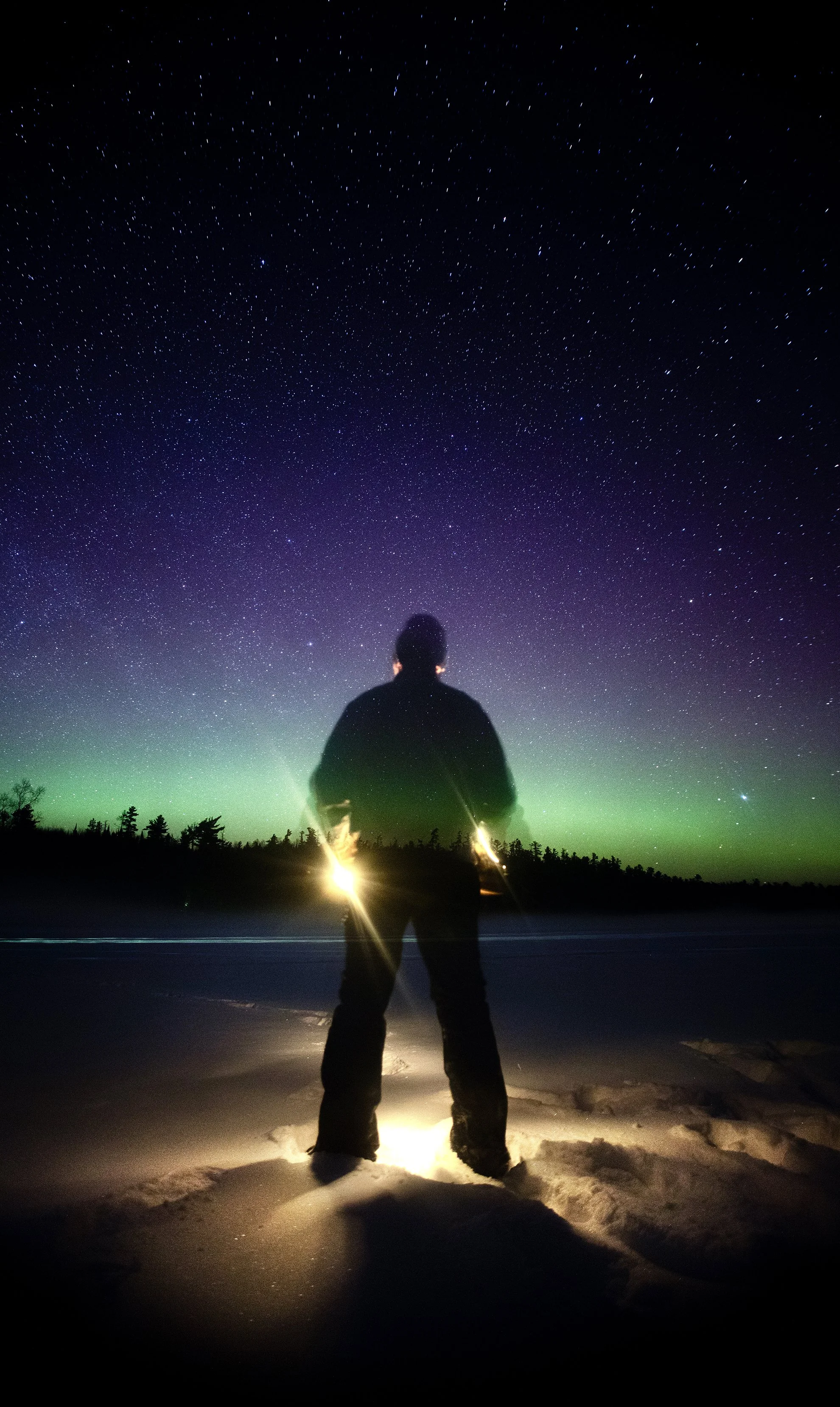
Conditions: Variable night-sky conditions observed across multiple seasons throughout 2024, including clear summer Milky Way visibility, intermittent autumn auroral activity, and winter moonrise under sub-zero temperatures. Periods of atmospheric haze and shifting cloud cover were present at times, though extended intervals of stable, low-light conditions allowed for consistent astrophotography and timelapse documentation across the Boundary Waters and adjacent forest regions.
Purpose of Study: To conduct a year-long visual study of nocturnal sky conditions across the Boundary Waters Canoe Area Wilderness and Superior National Forest — documenting seasonal celestial patterns including Milky Way position, lunar cycles, and auroral activity through repeated timelapse observation over the course of 2024.
Field Notes: This compilation represents a year-long documentation effort focused on the night sky above the Boundary Waters region — drawn from multiple overnight sessions across lake basins, forest clearings, and shoreline overlooks throughout 2024. The resulting sequences capture the Milky Way’s seasonal rotation, intermittent northern lights activity, and the shifting presence of moonlight across open wilderness terrain.
Filming took place within one of the few designated dark sky sanctuaries in the world — a status granted in recognition of the region’s exceptionally low levels of artificial light pollution by DarkSky International. These conditions allow for extended visibility of faint celestial detail rarely observable in more developed areas.
Returning to the same locations across changing seasons revealed subtle variations in atmospheric clarity, sky brightness, and auroral frequency — reinforcing the value of repeated night-based observation as part of an ongoing environmental and creative practice.